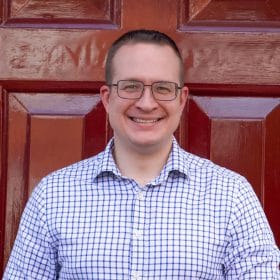
How do we know the Bible we read today reflects what was originally written? In this episode, Peter Montoro shares his journey from growing up in a Christian home to pursuing a PhD in textual criticism at the University of Birmingham. Along the way, he discovered that Christian faith is not about avoiding difficult questions, but engaging honestly with the evidence.
Peter discusses his research, which combines traditional methods of textual criticism with emerging technologies to better understand the transmission of the biblical text. He also introduces the influential church father John Chrysostom, whose writings shaped generations of biblical interpretation and continue to inform scholarship today.
Together, we explore faith, evidence, Bible translations, manuscript traditions, and why studying the history of the text can strengthen confidence in Scripture rather than undermine it.
 There's a Youtube video here!
I'm fine with Youtube cookies
In this episode:
- Peter’s journey from inherited faith to evidence-based conviction
- Why Christians shouldn’t fear difficult questions textual criticism and the reliability of the Bible
- combining technology with traditional scholarship
- the life and influence of John Chrysostom
- What ancient manuscripts can teach us about Scripture today
About Peter Montoro
Peter Montoro is a Research Associate in New Testament at Tyndale House, Cambridge.
He completed his PhD in textual criticism at the University of Birmingham, where his research explored new methods for studying biblical texts by combining traditional scholarly approaches with emerging technologies.
Peter works closely with Dirk Jongkind, Academic Vice-Principal at Tyndale House. Together, they have spent the past year working on the second edition of the Tyndale House Greek New Testament, which is scheduled for publication in late 2027.
His research focuses on the New Testament text, manuscript traditions, and the development of innovative approaches to textual criticism that help scholars better understand the history and transmission of Scripture.
November 13, 2026